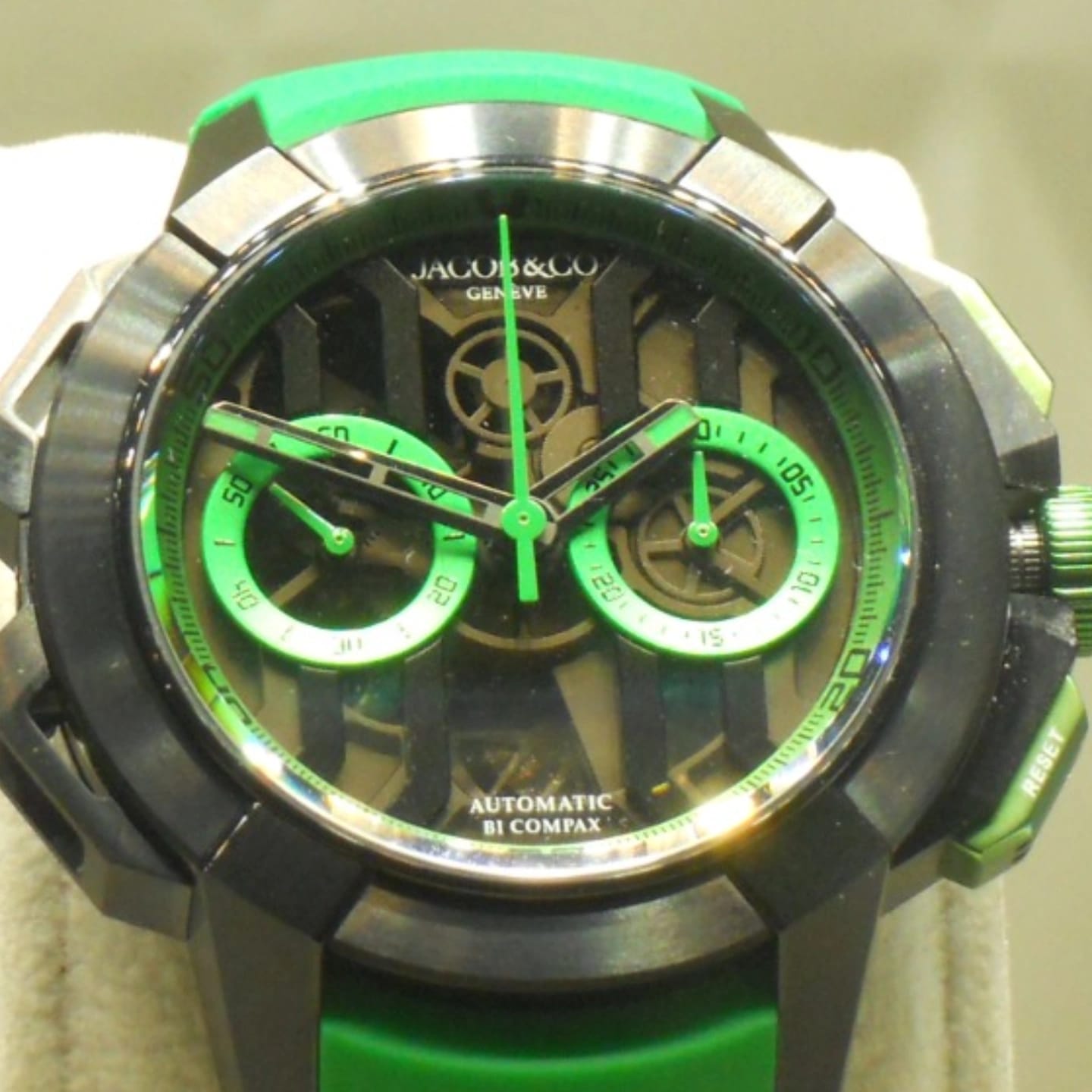

Front view
Dial, hands and bezel as delivered.
Case-back view
Case-back engraving and, where fitted, the sapphire display.
Movement
Calibre with its finishing and decoration.
On the wrist
Worn shot for proportion and strap drape.
Rolex · Daytona
Rolex Daytona 36 mm Meteorite Sapphire
Reference 99716OR.37
Reference at a glance
- Brand
- Rolex
- Collection
- Daytona
- Model
- Rolex Daytona 36 mm Meteorite Sapphire
- Reference number
- 99716OR.37
- Year / era
- 1953 · 1950s — pre-quartz mechanical era
- Complication
- Time and date
- Movement
- In-house automatic chronograph
- Case material
- Sapphire crystal case
- Dial type
- Meteorite
- Strap / bracelet
- NATO textile strap
- Water resistance
- 200 m
- Limited-edition status
- Limited edition of 250 pieces
Case, dial & bracelet
- Case dimensions
- 36 mm
- Case thickness
- 8.1 mm
- Case material
- Sapphire crystal case
- Bezel
- Bidirectional 24-hour Cerachrom
- Crystal
- Sapphire with internal AR treatment
- Dial
- Meteorite
- Hands
- Faceted dauphine hands, polished by hand
- Indexes
- Applied faceted white-gold indexes
- Bracelet / strap
- NATO textile strap
- Clasp / buckle
- Titanium deployant clasp
- Water resistance
- 200 m
Movement
- Movement / calibre
- Calibre 83C — In-house automatic chronograph
- Movement type
- High-frequency automatic
- Frequency
- 28,800 vph (4 Hz)
- Power reserve
- 72 hours
- Number of jewels
- 27 jewels
- Complications
- Time and date
- Functions
- Hours, minutes, small seconds
- Watchmaker
- Finishing, assembly and timing are carried out in the manufacture's own atelier.
Production & market
- Production period
- 1953 – 1956
- Limited-edition quantity
- 250 pieces
- Current market information
- Consistently trades above retail; waiting lists at authorised dealers remain long.
Designer
Emmanuel Gueit
Emmanuel Gueit came from a family of Geneva jewellers and was barely into his twenties when he drew the oversized Royal Oak Offshore in 1993 — a watch the house's traditionalists resisted and collectors turned into an icon.
Historical significance
Rolex Daytona 36 mm Meteorite Sapphire sits within Rolex's Daytona line, introduced in 1953. It carries the house codes established since 1905 — sapphire crystal case case, meteorite dial and in-house automatic chronograph — and is one of the references collectors use to date the evolution of the collection.
Interesting facts
- The case is finished by hand, alternating polished and satin-brushed surfaces in a single pass so the edges stay razor sharp.
- Early production dials show a slightly different minute track, and collectors pay a premium for them.
- The reference was originally planned as a one-year run and stayed in the catalogue for well over a decade.
The House
Rolex
Brand facts
- Founding year
- 1905
- Founder
- Hans Wilsdorf
- Headquarters
- Switzerland
- Tier
- Luxury
- Major collections
- Submariner, Daytona, GMT-Master II, Datejust, Day-Date, Yacht-Master, Sky-Dweller, Explorer, Oyster Perpetual, Sea-Dweller, Air-King, 1908, Milgauss
- Signature technologies
- Proprietary case-hardening and polishing · Composite and ceramic case materials
- Famous movements
- In-house automatic, chronometer certified · In-house automatic chronograph · In-house automatic, Superlative Chronometer · In-house manual-winding
- Notable watches
- Rolex Submariner 44 mm Skeletonised Platinum (1978) · Rolex Submariner 36 mm Ice 18k (1981) · Rolex Submariner 42 mm Meteorite Quartz (1982) · Rolex Submariner 38 mm Silvered 18k (1989)
Brand history
Rolex has spent more than 121 years refining a single idea: a watch should outlive its owner. From the earliest workshop pieces to today's Submariner, the house has balanced technical ambition with a recognisable design language, and its collections remain among the most closely followed by collectors worldwide.
Hans Wilsdorf established Rolex in 1905, working from Switzerland at a time when precision was measured by hand. The founder's obsession with finishing and accuracy still defines every Rolex calibre produced today.
Historical milestones
1905
Hans Wilsdorf founds Rolex in Switzerland.
1969
The quartz era forces Rolex to redefine mechanical watchmaking.
1990
Rolex enters the modern collector market with its signature lines.
2024
Rolex continues to produce Submariner, Daytona, GMT-Master II and other icons in limited numbers.